
Isis Unveiled –V2: Theology

Isis Unveiled was first published in 1877 as a single monumental volume that combined both science and theology. In this Arabic edition, however, it is presented in two separate volumes: the first focused on Science, and the second on Theology. While the first part shook the absolute confidence in materialist experimental science, this second part—entitled “Theology”—ventures into even more sensitive territory: a critique of religious institutions and dogmatic theology, and an attempt to uncover the universal dimension of spirituality that transcends sectarian divisions.
Helena Blavatsky’s aim was not to attack religious faith itself, but rather to critique what religion had become once it transformed into an authoritarian institution—imposing rigid doctrines and stifling the essence of authentic spirituality. She distinguishes between religion as a living experience of the sacred, and the structures that, over centuries, encased this experience in rigid rituals and hierarchical frameworks.
This volume presents broad comparisons between Christian theology, Eastern philosophies, Gnostic traditions, and ancient mythologies, showing that there exists a symbolic and intellectual unity that transcends cultures—evidence of a universal spiritual heritage. Rather than demolishing religion, Blavatsky seeks to liberate it from institutional and dogmatic constraints and to rediscover its original spirit.
The central idea running through the book is that truth cannot be reduced to static texts or monopolized by any single institution, but is understood only through the convergence of religion, philosophy, and esoteric knowledge. Thus, “Theology” is not merely a critique of institutional Christianity; it is a call to reconnect spirit with faith and to restore ancient wisdom as a complement to living religious experience.
Publishing Isis Unveiled – Volume II: Theology in Arabic today allows readers to revisit one of the boldest critical engagements with global religious traditions. At a time when interfaith dialogue and the search for shared human values are increasingly emphasized, Blavatsky’s ideas regain their relevance, reminding us that the foundation of spirituality lies not in sectarian divisions, but in the universal spiritual legacy that unites humanity.
To fully appreciate the weight of this work, one must consider its author. Helena Petrovna Blavatsky (1831–1891), the Russian thinker and traveler who journeyed through East and West in search of esoteric wisdom, became known for her intellectual audacity and her capacity to stir controversy. In 1875, together with Henry Olcott, she founded the Theosophical Society in New York, an organization dedicated to building bridges between Eastern philosophies and Western thought, between science and religion, and between spiritual experience and modern life. Some regarded her as a spiritual leader and sage, while others saw her as a controversial adventurer—but her influence on modern Western thought remains undeniable. Her works, foremost among them Isis Unveiled, opened new horizons for discussions on the relationship between theology, philosophy, and spirituality.
More than a century after its publication, this book still resounds with her voice: bold, critical, and insistently relevant—reminding us that the sacred does not belong to any institution or sect, but is a universal mystery shared by all humankind.
منشورات ذات صلة


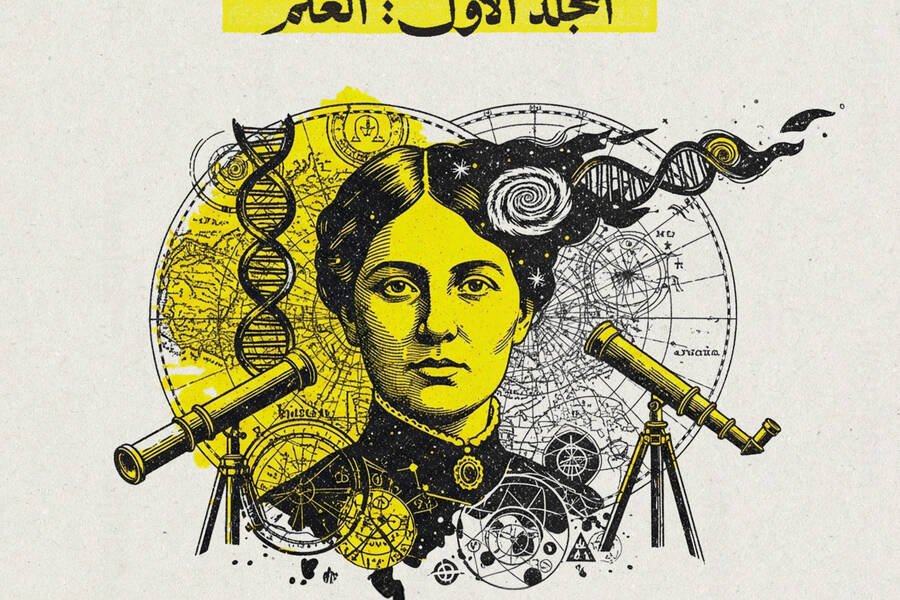
Isis Unveiled –V1: Science
When Isis Unveiled first appeared in 1877, it delivered an intellectual shock…


Apprenticed to a Himalayan Master
The story begins on the road to the Himalayas. A boy from Kerala, driven by a…